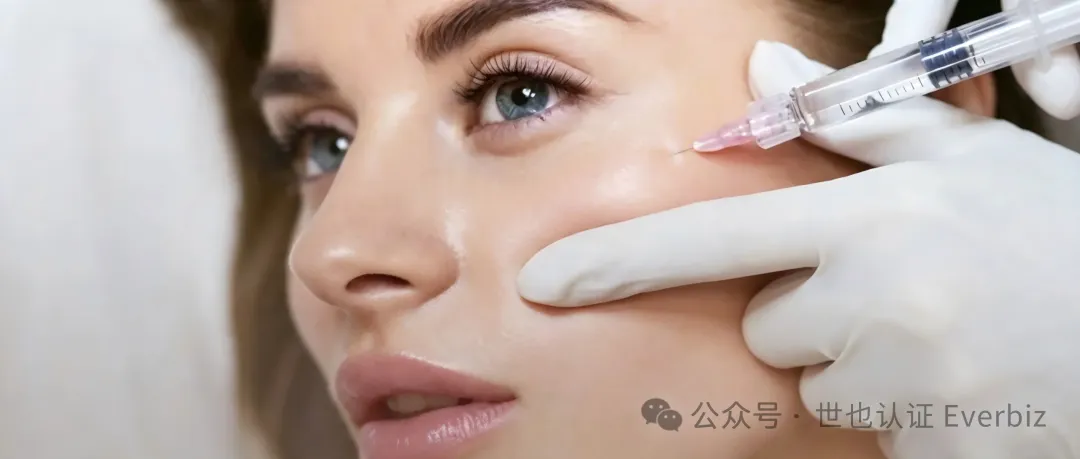
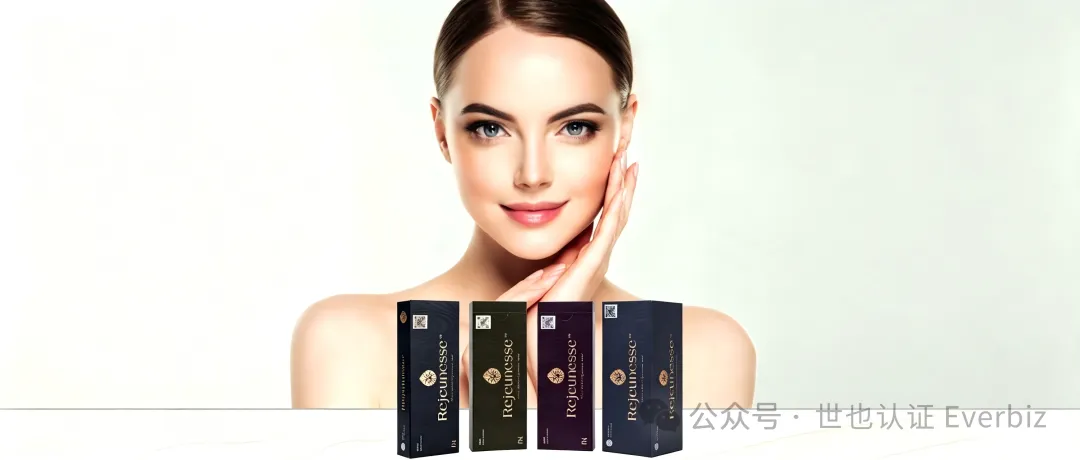
Hyaluronic acid (sodium hyaluronate) fillers are generally placed in the highest risk class in the main Southeast Asian markets (Class 4 in Thailand; Class D in Vietnam, Indonesia, the Philippines, Singapore and Malaysia).
What do regulators really care about when reviewing registrations for these products? And what should companies prepare in advance? This article covers both regulatory focus points and a document checklist to help you get ready before registration.
Specific provisions differ by country, but the review logic is highly consistent, revolving around the following core questions:
1. What is the product – structure, composition and basis for classification
Regulators first want to establish exactly what the product is: is it an implantable device that is wholly or mainly absorbed? What is the cross-linking process? Does it contain an anesthetic (such as lidocaine)? This directly determines the class and review route.
You need to explain: – components such as prefilled syringes/needles – whether it is a gel particle suspension or a homogeneous gel – how the sodium hyaluronate is produced and its labeled concentration (before and after cross-linking) – sterilization method, single use or not, shelf life
2. Safety – biocompatibility and risk management
This is the top priority of the review. Regulators look at: – biocompatibility data for the material itself and its degradation products – whether there are animal-derived components (e.g. non-animal cross-linked sodium hyaluronate vs. animal-derived) – risk identification, evaluation and control throughout the life cycle (ISO 14971 risk management)
3. Effectiveness – is the clinical evidence sufficient?
Requirements for clinical evidence vary widely. Vietnam, with limited acceptance of foreign clinical data, is the most typical example among the six countries, while Singapore, Thailand and the Philippines generally accept “reference-country approval” as a basis for acceleration. Key focus points: – whether there is a sufficient clinical evaluation report or clinical trial data supporting safety and effectiveness – if the product is already approved in a reference country (China NMPA, EU CE MDR, US FDA, Japan PMDA, Australia TGA, etc.), whether this can be used as evidence – whether there are post-market adverse event or withdrawal records
4. Who is responsible – compliance responsibilities of the local agent and license holder
Overseas manufacturers cannot apply directly; registration must be submitted through a legal local entity (importer/agent/distributor). Regulators check: – whether the agent/license holder is properly qualified (e.g. import license in Thailand, LTO in the Philippines) – whether the scope of authorization is clear (registration only, or also production oversight and post-market surveillance) – the boundaries of the license holder’s legal responsibility for the product’s life cycle
5. Labeling and IFU – local language and compliant claims
All countries require the IFU and labels in the local official language, with no medical claims beyond the registered scope. This is especially sensitive for e-commerce sales: since 2026, regulators in several countries have begun using product descriptions and sales records on e-commerce platforms as evidence for enforcement.
2. Registration Document Checklist
Based on the common structure of actual submissions, we recommend preparing documents in the following modules:
Module 1: Basic product information
-
Product name (including the core term “injectable filler” and characteristic terms such as “cross-linked sodium hyaluronate” or “with lidocaine hydrochloride”)
-
Product description, specifications and list of components
-
Intended use and indications
-
Rationale for classification and risk class determination
Module 2: Design and manufacturing information
-
Detailed description of the design and manufacturing process
-
Details of raw materials and formulation
-
Sodium hyaluronate production process, cross-linking method and labeled concentration
-
Sterilization validation report
-
Quality management system documents (e.g. ISO 13485 certificate)
Module 3: Safety and risk management
-
Biocompatibility test reports
-
Risk analysis and risk management report (to ISO 14971)
-
Declarations or test data on animal-derived/microbial-derived/recombinant components
Module 4: Clinical and marketing evidence
-
Clinical evaluation report or clinical trial data
-
Registration history in other countries (including EC DoC, registration certificates, etc.)
-
Withdrawal history in other countries (if any)
-
Status of pending registration applications in other countries
Module 5: Labeling and packaging
-
Separate labels for each pack size (including catalogue numbers)
-
Instructions for use (IFU) in the local language
-
Artwork for the primary label and outer packaging label
Module 6: Company qualification documents
-
Manufacturer qualification documents (business license, GMP/ISO certificates, etc.)
-
Letter of authorization to the local agent/importer/license holder (notarized and legalized by the embassy/consulate)
-
Certificate of Free Sale (CFS)
Module 7: Other declarations
-
Declarations on whether the product contains inactivated biological materials or components of microbial, recombinant or irradiated origin (if not, a declaration letter stating so is required)
-
Declaration of Conformity
3. Some Reminders
1. Complete documents ≠ smooth review – terminology accuracy matters too
Even with complete documents, if technical terms in the local-language translation (such as “contraindications”, “adverse reactions” or “cross-linked sodium hyaluronate”) are inaccurate or don’t match local medical usage, the documents may still be returned. We recommend building a unified glossary in advance and using a certified professional medical device translation agency.
2. Build your reference-country evidence chain with forward planning
If you plan to register first in an authoritative market (EU MDR, China NMPA, US FDA, etc.) and then enter Southeast Asia, consider keeping a reusable set of core technical documents (such as biocompatibility data and the risk management report) while preparing your EU/China dossier, reducing duplicated work for each Southeast Asian country.
3. For markets with limited acceptance of clinical data, such as Vietnam and Indonesia, assess early whether supplementary clinical evidence may be needed
If your existing clinical evaluation report is based mainly on foreign data, assess early whether you need supplementary real-world data (RWD) or a small-scale clinical observation with local medical institutions, to avoid being asked for more information mid-registration because of insufficient clinical evidence, which prolongs the timeline.
3. Summary
Registering hyaluronic acid fillers in Southeast Asia essentially means answering regulators’ persistent questions: “Is this product safe? Is it effective? Who is responsible for it?” Preparing each module’s documents in advance and getting terminology and localized translation right is the most direct and effective way to shorten approval times and reduce rounds of queries.
EVERBIZ has experience obtaining approvals for hyaluronic acid fillers in several Southeast Asian countries. If you have such products, contact EVERBIZ directly for professional technical guidance!
EVERBIZ Certification Services (Shanghai) Co., Ltd. (EVERBIZ) is a professional compliance service platform for testing, certification, consulting and training of medical products, dedicated to helping leading medical R&D companies at home and abroad improve their compliance capabilities and competitiveness. The company has offices and branches in Shanghai (China), Hong Kong, Munich (Germany), Salzburg (Austria), Thailand, Vietnam, Singapore and Malaysia, covering nearly 25 industries of compliance products (such as medical devices, new energy, household appliances, lighting, tools, laboratory instruments, machinery, in vitro diagnostics, wireless products and reagents).
Shanghai: Room 909, Building 1, Lane 111 Luxiang Road, Baoshan District, Shanghai, China
Germany: Landsberger Str. 155, 80687 München, Germany
Austria: Innsbrucker Bundesstraße 136/3, 5020 Salzburg, Austria
Hong Kong: Room A1, 11/F Winner Building, 36 Man Yue Street, Hung Hom, Kowloon, Hong Kong
Thailand: 5/32 Baan Klang Muang Monaco, Soi Anamai, Srinakarin Rd., Pattanakarn, Suan Luang, Bangkok 10250, Thailand
Singapore: 133 New Bridge Road #8-1 Chinatown Point, Singapore 059413
Vietnam: 81 Cuxa Phu Lam D, Phuong Binh Phu, District 6, Ho Chi Minh City, Vietnam
Malaysia: Unit No. 92a, Jalan 13/142, Taman Orkid Desa, 56000 Kuala Lumpur, W.P. Kuala Lumpur, Malaysia