
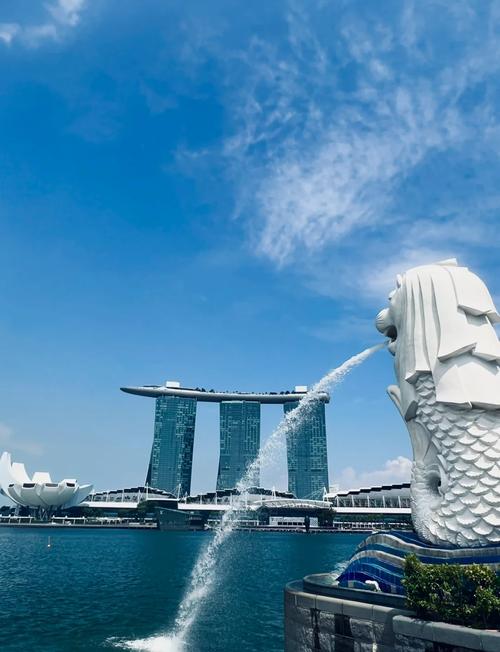
Introduction to Singapore Medical Device Registration: This page covers the regulatory authority, device classification, registration process, local representative requirements and FAQs for medical device registration in Singapore. Medical devices in Singapore are regulated by the Health Sciences Authority (HSA), and EVERBIZ can support you through the entire process from classification to registration.
1. Regulatory Authority and Legal Framework
Singapore regulates medical devices through the Health Sciences Authority (HSA), which is responsible for device classification, product registration, dealer licensing and post-market surveillance under the Health Products Act and the Health Products (Medical Devices) Regulations 2010.
2. Device Classification
Singapore uses a four-tier classification system (Class A, B, C and D), with Class A the lowest risk and Class D the highest:
| Risk class | Description |
|---|---|
| Class A | Low risk, generally exempt from registration |
| Class B | Low to moderate risk |
| Class C | Moderate to high risk, including certain in vitro diagnostic (IVD) products, active therapeutic devices, implants, etc. |
| Class D | High risk |
Class A devices are usually exempt from registration but must still comply with the Essential Principles of safety and performance.
3. Requirements for the Registrant
All medical devices must be registered with the HSA under the Health Products Act before commercial distribution. Unlike in many countries, foreign manufacturers cannot apply directly to the authority. They must appoint a licensed Authorized Representative (AR) in Singapore, which becomes the legal holder of the device registration and the official point of contact with the HSA.
4. Evaluation Routes
The HSA uses a confidence-based evaluation framework that adjusts the level of scrutiny to product risk and regulatory history. GN-15 R12 sets out three main routes: Immediate Class B Registration (IBR), Abridged Evaluation and Full Evaluation.
1. Immediate Registration (IBR)
Available only for eligible Class B devices, which are registered immediately upon successful submission and payment via SHARE (Singapore’s health products registration system), provided all eligibility criteria are met, such as prior approval by a reference regulatory agency and a good safety record. The HSA reserves the right to audit the documents after registration and may cancel the registration if the criteria are not met.
2. Abridged Evaluation
For Class B, C and D devices already registered in one reference country. Devices authorized in the US, Europe, Canada, Australia or Japan are eligible for the abridged route.
3. Expedited Evaluation
For Class B, C and D devices registered in two reference jurisdictions, at least one of which is an HSA reference agency (US FDA, Health Canada, an EU Notified Body, Australia’s TGA, Japan’s PMDA). Approval is faster than under the abridged and full evaluation routes.
4. Full Evaluation
For devices of any class without approval from any reference jurisdiction. A complete ASEAN Common Submission Dossier Template (CSDT) must be submitted for detailed technical review by the HSA, and approval takes the longest.
5. Priority Review Scheme (PRS)
PRS Route 1 is designed for high-impact devices that target Singapore’s priority healthcare areas (such as cancer, diabetes, cardiovascular, ophthalmic and infectious diseases) and clearly address unmet clinical needs; Route 2 applies to devices that do not qualify for Route 1 but still go through full evaluation. Both offer faster registration.
5. Submission System and Dossier Format
Applications are submitted electronically via the Medical Device Information and Communication System (MEDICS); the August 2025 revision of GN-15 formally consolidated the SHARE platform as the central submission system, replacing the previously separate systems.
Dossiers must follow the ASEAN Common Submission Dossier Template (CSDT) format, and all documents must be submitted in English.
6. Validity and Maintenance
Registrations do not expire, but an annual fee must be paid to keep them valid. Once registered, the product is entered in the Singapore Medical Device Register (SMDR).
7. Approval Timelines
Products registered in more than one reference country, or registered in one reference country with a three-year safe-use history, are registered fastest; the overall timeline is about 1 to 10 months.
8. Latest Developments (2025–2026)
Malaysia–Singapore regulatory reliance: Malaysia’s Medical Device Authority (MDA) confirmed on 1 March 2026 that the MDA–HSA Regulatory Reliance Pathway will continue after the successful completion of a six-month pilot (September 2025 to February 2026). Under this pathway, devices registered by Malaysia’s MDA through full conformity assessment can apply for Singapore registration via the abridged route; conversely, devices listed on Singapore’s SMDR can use their Singapore approval to apply for Malaysian registration via the Verification Route.
Change management for Software as a Medical Device (SaMD): In 2024 the HSA launched a pilot SaMD Change Management Program (CMP) framework, revised in early 2025 based on industry feedback to include machine-learning-enabled SaMD.
How EVERBIZ Can Help
EVERBIZ has offices in Shanghai, Hong Kong, Germany, Austria, Singapore, Malaysia, Thailand and Vietnam. For the Singapore market, we offer:
- Product classification and registration pathway planning
- Preparation and review of CSDT technical documentation
- Local authorized representative / registration holder arrangements
- Submission, responses to deficiency letters and progress tracking
- Post-market compliance maintenance (changes, renewals, adverse event reporting)
Contact us for a Singapore medical device registration plan and quote, or see our registration services for other countries and regions.
Singapore Medical Device Registration FAQs
Which authority regulates medical devices in Singapore?
The Health Sciences Authority (HSA), under the Health Products Act.
Can foreign manufacturers register directly in Singapore?
No. Foreign manufacturers must appoint a locally licensed company in Singapore as the Registrant to submit applications to the HSA.
How are medical devices classified in Singapore?
By risk into Classes A, B, C and D. Low-risk Class A devices are usually exempt from product registration but must still comply with the Essential Principles.
How long is a Singapore medical device registration valid?
Registrations do not expire, but an annual retention fee must be paid to keep them valid; registered products are listed on the Singapore Medical Device Register (SMDR).
Related Reading
- Singapore Medical Device Regulations Updated Again: Key HSA Changes in 2026 and How Companies Should Respond
- Singapore HSA Issues Major New Rules: AI Medical Device Regulation Now in Force
- Singapore Cosmetics Compliance: Notification Agent, Label Review and PIF Guidance – End-to-End Services
- Singapore HSA Medical Device Registration