If your company is expanding into several overseas markets at once – say the EU, ASEAN and Latin America – you have probably experienced this: the same technical documentation often has to be reworked and resubmitted to meet each country’s requirements, with different review times and ever-growing communication costs.
This “everyone for themselves” regulatory landscape is exactly what a major new document from the International Medical Device Regulators Forum (IMDRF) aims to change.
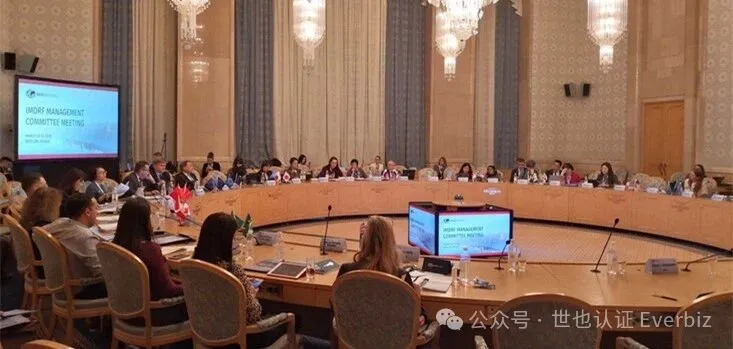
In March 2026, the IMDRF Good Regulatory Review Practices Working Group (GRRP WG) published the Playbook for Medical Device Regulatory Reliance Programs (IMDRF/GRRP WG/N89 FINAL:2026).
This is not a new technical regulation but an “operations guide” written for regulators, showing them how to set up and optimize regulatory reliance mechanisms with one another.
For companies, the signal is also worth noting: it suggests that over the next few years, global medical device registration pathways may become shorter and more efficient.
Before discussing the playbook, it’s worth clarifying the relationship between the IMDRF, which issued it, and the WHO Global Model Regulatory Framework for Medical Devices (GMRF) we covered earlier – the question readers ask us most.
1. Different nature: intergovernmental organization vs. voluntary forum of regulators
The WHO is an intergovernmental organization within the UN system whose members are sovereign states; the IMDRF is a voluntary group of medical device regulators from around the world, successor to the Global Harmonization Task Force (GHTF) founded in 1992, aiming to accelerate international harmonization and convergence of medical device regulation. Importantly, the IMDRF provides guidance that is not binding and has no power to require countries to implement uniform directives – in this respect it is the same as the WHO GMRF; neither is a mechanism for “mandatory unified registration”.
2. The WHO was one of the IMDRF’s founding participants
In October 2011, representatives of medical device regulators from Australia, Brazil, Canada, China, the EU, Japan and the US, together with the World Health Organization (WHO), met in Ottawa to discuss the establishment and operation of the new IMDRF forum. In other words, the WHO was present from the IMDRF’s inception, not a later addition.
3. Current role: official observer, without voting rights
The WHO is currently an official observer of the IMDRF Management Committee. According to the IMDRF, the Management Committee may designate a limited number of official observers (from the WHO or other regulators) based on their contribution or value to the IMDRF; official observers do not take part in decision-making and require the unanimous approval of the Management Committee.
Other official observers currently listed by the IMDRF include Argentina, Saudi Arabia and Switzerland (Swissmedic was approved as an observer in 2023 and upgraded to full Management Committee member in 2025).
This means that although the WHO has long been present and can take part in strategic discussions, it has no vote. Formal regulatory standards and documents (such as this playbook) are developed under the leadership of the Management Committee members, currently including regulators from Australia, Brazil, Canada, China, the EU, Japan, Russia, Singapore, South Korea and the US.
4. Complementary roles: the WHO sets direction, the IMDRF provides detailed rules
The WHO focuses more on going “from 0 to 1” – helping countries with limited resources and immature regulatory systems build basic regulatory capacity, which is the purpose of the WHO GMRF we covered earlier. Under the mandate of World Health Assembly Resolution WHA60.29, the WHO also encourages member states to develop national or regional guidelines on good manufacturing and regulatory practices, establish surveillance systems and, where appropriate, take part in international harmonization.
The IMDRF focuses more on going “from 1 to N” – producing concrete, practical harmonization tools for mature or intermediate regulators that already have a regulatory foundation, such as this playbook and earlier documents on device terminology and cybersecurity. One sets the stage and direction, the other builds the detailed coordination rules; together they form the two main tracks of global medical device regulatory convergence.
What problem does the playbook address?
Put simply, regulatory reliance means that when a regulator in one country or region makes an approval decision, it takes into account and gives significant weight to assessments already made by other trusted regulators, rather than re-reviewing everything from scratch.
The idea itself is not new, but in the past countries’ approaches were fragmented and lacked a systematic reference; the IMDRF playbook aims to fill this gap.
The IMDRF’s core aims are threefold:
-
Reduce duplicated work for regulators, focusing limited review resources where in-depth review is really needed and freeing capacity to respond to public health emergencies;
-
Lower global compliance costs for companies – especially small and medium-sized device companies, which are often kept out of overseas markets because they cannot afford the time and money of repeated submissions in several countries;
-
Get safe and effective medical devices to patients faster – the ultimate aim of all regulatory convergence work.
Three reliance models for different regulatory capabilities
The most practical part of the playbook summarizes reliance practices already in place worldwide into three typical models, which regulators can choose based on their legal framework and resources, or combine. The degree of reliance increases from top to bottom:
Taking the abridged route as an example: if a company’s product has already been approved by a reference regulator recognized by Singapore’s Health Sciences Authority (HSA), it only needs to submit proof of approval and a simplified technical dossier, and the HSA conducts a targeted review based on the foreign assessment – shortening review time while the local regulator keeps final decision-making power.
This model of “improving efficiency without giving up control” is currently the most widely used form of reliance worldwide.
Three easily confused concepts: reliance, convergence and harmonization
Before advancing regulatory reliance, the playbook stresses three concepts that must be clarified – they represent different stages of global regulatory cooperation and are related but fundamentally different:
Notably, although convergence and harmonization provide a firmer foundation for reliance and help reliance programs run more smoothly, they are not prerequisites – even if two countries’ regulatory requirements are not yet fully aligned, regulators can still set up reliance programs according to their own circumstances. This means that for countries at different stages of regulatory development, reliance is a relatively realistic route that can be implemented more quickly.
What it means for different stakeholders
For companies operating internationally
Duplicate registration submissions and audits will be significantly reduced, lowering the time and cost of entering multiple markets. With MDSAP, for example, a single audit can satisfy the regulatory requirements of several participating jurisdictions, with no need for separate on-site inspections for each market.
For SMEs going global
Such companies have often been kept out of overseas markets because they could not afford the cost of repeated submissions. The spread of abridged routes and recognition-based reliance effectively opens the path of “first get approval in a mature market, then enter other markets at lower cost”, significantly lowering the barrier to going global.
For conformity assessment bodies
Wider use of reliance programs will drive further convergence of assessment standards and increase global acceptance of assessment results, while bodies’ expertise can be reused more fully through work-sharing models.
For regulators themselves
They can focus limited review resources on high-risk areas that really need in-depth review, and free up capacity to handle urgent approvals during public health emergencies (such as pandemics and natural disasters).
Summary
The publication of this playbook signals that practical alignment among IMDRF members and more regulators worldwide will accelerate further. Global medical device regulation is moving from “separate systems working in isolation” toward greater coordination and efficiency. Together with the earlier WHO GMRF framework and the 2026 expansion of WHO prequalification (PQ) of medical devices, a clear thread emerges: global regulatory cooperation is moving from “each country building its own system” to the next stage of “connecting systems once they are built”.
For companies planning overseas registration, closely watching whether target-market regulators have adopted or plan to adopt similar reliance mechanisms could be an important lever for optimizing global registration pathways and saving compliance costs. If your product is entering Southeast Asia, contact us for medical device registration and ISO 13485 compliance advice for Singapore, Malaysia, Thailand, Indonesia, the Philippines, Vietnam and other markets.
EVERBIZ International Medical Device Registration: specializing in global medical device regulations and international registration services
From product classification, regulatory analysis and ISO 13485 system planning to overseas registration, technical documentation and local regulatory compliance, we help Chinese medical device companies enter global markets more efficiently.
EVERBIZ Certification Services (Shanghai) Co., Ltd. (EVERBIZ) is a professional compliance service platform for testing, certification, consulting and training of medical products, dedicated to helping leading medical R&D companies at home and abroad improve their compliance capabilities and competitiveness. The company has offices and branches in Shanghai (China), Hong Kong, Munich (Germany), Salzburg (Austria), Thailand, Vietnam, Singapore and Malaysia, covering nearly 25 industries of compliance products (such as medical devices, new energy, household appliances, lighting, tools, laboratory instruments, machinery, in vitro diagnostics, wireless products and reagents).
Shanghai: Room 909, Building 1, Lane 111 Luxiang Road, Baoshan District, Shanghai, China
Germany: Landsberger Str. 155, 80687 München, Germany
Austria: Innsbrucker Bundesstraße 136/3, 5020 Salzburg, Austria
Hong Kong: Room A1, 11/F Winner Building, 36 Man Yue Street, Hung Hom, Kowloon, Hong Kong
Thailand: 5/32 Baan Klang Muang Monaco, Soi Anamai, Srinakarin Rd., Pattanakarn, Suan Luang, Bangkok 10250, Thailand
Singapore: 133 New Bridge Road #8-1 Chinatown Point, Singapore 059413
Vietnam: 81 Cuxa Phu Lam D, Phuong Binh Phu, District 6, Ho Chi Minh City, Vietnam
Malaysia: Unit No. 92a, Jalan 13/142, Taman Orkid Desa, 56000 Kuala Lumpur, W.P. Kuala Lumpur, Malaysia