In August this year, police raided a warehouse in Bang Phli, Bangkok, after a tip-off that many online shops were selling cosmetics and supplements without Thai labels or approval. The inventory included more than 83,000 items imported from Japan alone, worth over THB 8.34 million. The warehouse had originally been a transit point for imported goods, but gradually became a storage and fulfillment site for several e-commerce sellers.
The news itself has nothing to do with contact lenses, but the pattern is worth noting: sold online, no Thai label, no approval – these three things together are exactly what many colored-lens brands have been doing for years. In December 2025, the Thai FDA issued a clarification stating plainly that all contact lenses – whether corrective, therapeutic or purely cosmetic colored lenses – are regulated as medical devices and require a Notification certificate before they can be sold. Some used to believe that purely decorative lenses with no vision correction could get around this; the notice essentially closes that door, and together with the warehouse raid it shows that enforcement is real.
This time we look at what Thai reviewers actually focus on when assessing colored and contact lenses, and also explain a recent new regulation.
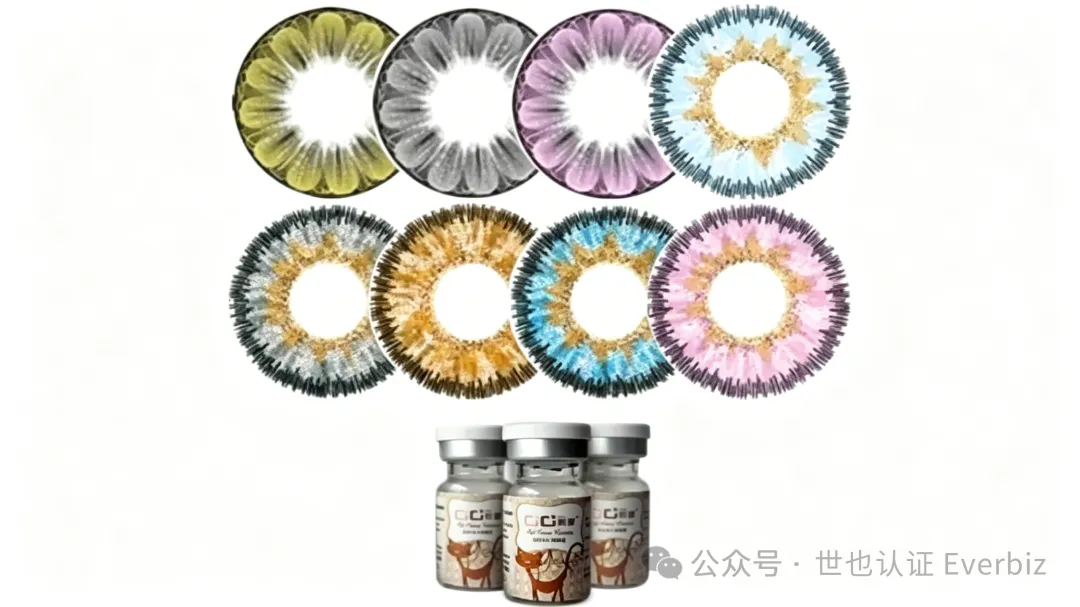
Section 4(3) of Thailand’s Medical Device Act clearly defines contact lenses, placing corrective lenses, therapeutic lenses and cosmetic/colored lenses (Cosmetics/Colored Lens in the original) under the same definition, without singling out “purely decorative” lenses. In other words, stating “does not correct vision, purely cosmetic” in product documents does not allow a product to skip registration. This is the first point we confirm with clients – many brands start preparing documents as if for a cosmetic product, and with the wrong direction, they usually have to start over.
Which registration route: how classification is determined
Thailand classifies medical devices into Classes 1 to 4 from low to high risk. Contact lenses (including colored lenses) usually fall into Class 2 or 3 and follow the “Notification” route, with documents prepared in CSDT (Common Submission Dossier Template) format for Thai FDA review. Whether a product is Class 2 or 3 depends on factors such as daily vs. monthly disposable and wearing time – it is not one-size-fits-all. We recommend confirming the class with your local agent before submission, as choosing the wrong template means time-consuming rework.
If the product is already approved by the US FDA, an EU Notified Body, Japan, Canada, Australia or Singapore’s HSA, has been on the market for at least a year and has no adverse events, you can apply for abridged evaluation: some technical documents can be waived, and review steps and time can be compressed to 6–8 months. If you qualify, this route is worth pursuing first. If there is no reference-country approval, EVERBIZ can also help companies apply for Thai FDA approval, which in practice takes about 8–10 months.
What reviewers actually focus on
1. Biocompatibility is essentially unavoidable – complete test reports for cytotoxicity, sensitization and eye irritation to ISO 10993 are required. The most common reason for deficiency requests we see is the direct use of China’s GB/T 16886 instead, which the Thai FDA does not accept directly; additional documents are required.
2. The extra pigment/dye layer in colored lenses compared with ordinary contact lenses is singled out for questioning in review. Reviewers want to know whether the color material will fade or migrate into tears, which requires dedicated pigment leaching/migration testing – many colored-lens brands have never done this because ordinary cosmetic reviews do not ask about it.
3. Next come optical and physical properties: diameter, base curve, water content and oxygen transmissibility (Dk/t) must be supported by third-party test reports, usually issued to the contact-lens-specific ISO 18369 series.
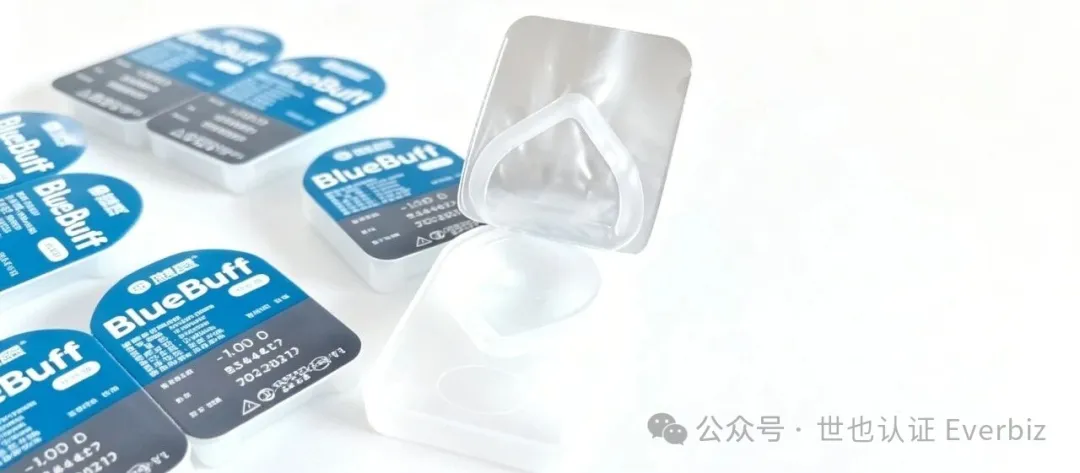
4. Sterility and packaging cannot be skipped either, especially for individually packed daily disposables – test reports on sterility assurance and package seal integrity are almost always requested.
5. Another easily overlooked point: the issuing country on the Certificate of Free Sale (CFS), the factory address and other information on the ISO 13485 certificate must all match, and the information on registration certificates from reference countries must be consistent with the Thai application; otherwise, a deficiency request is very likely.
Labeling: more detailed requirements from 20 June 2026
In January this year, Thailand’s Ministry of Public Health issued new Medical Device Labeling Regulations (B.E. 2568), effective from 20 June 2026; supplementary labels for imported products must be applied within 120 days of entry.
The new rules detail the label and IFU content for home-use products, professional-use products, software devices, reusable devices and accessories. At a minimum, the product name, intended use, lot number, manufacturing/expiry dates and manufacturer or importer information must be stated in Thai or English, and the IFU must clearly state the method of use, indications, warnings and contact details.
For colored and contact lenses, the new rules and the late-2025 clarification that “all contact lenses are regulated as medical devices” apply the same logic at different stages – one closes the question of whether the product is a medical device, the other further standardizes labeling and IFU details. When preparing documents, add the labeling regulation to your checklist rather than discovering as 20 June approaches that the IFU needs to be retranslated.
The local agent is not a formality
Foreign manufacturers cannot submit documents directly to the Thai FDA; applications must be submitted through an agent registered locally in Thailand and holding an establishment license, who also handles subsequent regulatory communication. We recommend settling this early rather than looking for an agent after all technical documents are ready – when the agent gets involved affects how early work such as classification and document format is prepared.
The most common ways things go wrong in the cases we’ve handled
Declaring colored lenses as “ordinary consumer goods/beauty accessories”, which is treated as unlicensed trading;
Missing migration tests for the color layer of colored lenses, or only a description of material composition without actual test data;
The CFS issuing country does not match the actual place of manufacture, with no supporting explanation;
Labels without Thai translation, or incomplete warnings and indications – with the new labeling regulations in force, there is even less room for error here.
Summary
With the late-2025 clarification and this year’s new labeling rules, Thailand’s regulatory position on colored and contact lenses is clear, leaving virtually no room to get by with the argument that “decorative products are not medical devices”. Although the Bang Phli warehouse raid did not target contact lenses, the approach is the same – first check online shops and labels, then trace licenses upstream. Rather than scrambling after goods are held at customs, it is far cheaper to prepare biocompatibility, color-layer safety and optical performance data in advance.
EVERBIZ International Medical Device Registration
We specialize in global medical device regulations and international registration services, helping Chinese medical device companies enter global markets more efficiently. If your colored or contact lens products are going overseas, contact us for registration and compliance advice for Thailand and other ASEAN markets.