
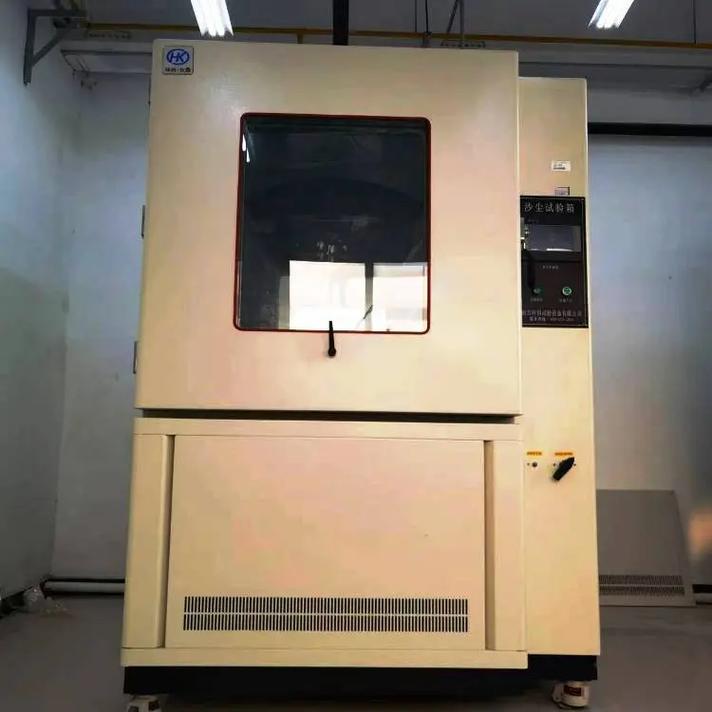
Introduction to Aging Testing for Medical Devices
1. Basic Concepts
Aging test: a test that simulates the changes in environmental conditions a product experiences during storage, transport and use, to evaluate whether a medical device and its packaging can maintain their design performance, safety and functional integrity throughout the intended shelf life.
Core purposes:
-
Establish the product’s shelf life / expiration date
-
Verify the product’s safety, effectiveness and performance stability throughout its shelf life
-
Verify the ability of the sterile barrier system (SBS) to maintain sterility throughout the shelf life
-
Assess the long-term stability of materials, performance and packaging
-
Support registration submissions and change assessments
2. Key Regulations and Standards
| Standard/guidance | Content |
|---|---|
| ASTM F1980-21 | Standard guide for accelerated aging of sterile barrier systems (the most important) |
| ISO 11607-1:2019 | Requirements for packaging systems for terminally sterilized medical devices |
| ISO 11607-2:2019 | Validation of packaging forming, sealing and assembly processes |
| ASTM D4332 | Standard conditioning atmospheres for packaging before distribution testing |
| ASTM D4169 | Performance testing of shipping containers and systems |
| ICH Q1A(R2) | Stability testing of new drug substances and products (for reference) |
| GB/T 19633 | Chinese equivalent packaging standards |
| YY/T 0681 series | Chinese test methods for sterile medical device packaging |
| IEC 60601-1 | Medical electrical equipment (including clauses on aging) |
| ISO 10993-13 | Identification and quantification of degradation products from polymeric medical devices |
3. Key Terms
| Term | Meaning |
|---|---|
| Shelf life | The period during which the product maintains its specified performance |
| Expiration date | The date until which the product can be used safely and effectively |
| Accelerated aging (AA) | Speeding up degradation by raising temperature and other conditions |
| Real-time aging (RT) | Actual aging under labeled storage conditions |
| AAT (accelerated aging time) | Accelerated Aging Time |
| AAF (accelerated aging factor) | Accelerated Aging Factor |
| Q₁₀ | The factor by which the reaction rate increases for every 10 °C rise in temperature |
| TAA | Accelerated aging temperature |
| TRT | Room/labeled storage temperature |
4. Two Types of Aging Tests
1. Accelerated aging
-
Basis: the Arrhenius equation – higher temperatures speed up chemical reactions
-
Purpose: estimate long-term aging effects in a shorter time
-
Use: supports early market launch as interim evidence
-
Limitation: cannot fully replace real-time aging; some degradation mechanisms cannot be simulated
2. Real-time aging
-
Basis: natural aging under the product’s labeled storage conditions
-
Purpose: final verification of the shelf-life claim
-
Use: must be started at the same time as accelerated aging; real-time data ultimately prevails
-
Limitation: time-consuming (1, 2, 3 or 5 years)
Key principle: accelerated and real-time aging must be run in parallel; accelerated data are only a prediction, and real-time data are the final basis.
5. Accelerated Aging Principle and Calculation (ASTM F1980)
Arrhenius equation basics
Accelerated aging is based on the assumption that for every 10 °C rise in temperature, the chemical reaction rate increases by a factor of Q₁₀.
Core formula
$$AAF = Q_{10}^{(T_{AA} – T_{RT})/10}$$
$$AAT = frac{RT}{AAF}$$
Where:
-
AAF: accelerated aging factor
-
AAT: accelerated aging time (time to be held under accelerated conditions)
-
RT: real-time aging period to be simulated
-
T_AA: accelerated aging temperature (°C)
-
T_RT: labeled storage temperature (usually 22–25 °C)
-
Q₁₀: temperature coefficient, usually conservatively set at 2.0 (1.8–2.5 may also be used)
Calculation example
Example: claimed shelf life of 1 year, accelerated aging temperature 55 °C, labeled storage temperature 25 °C, Q₁₀ = 2.0
$$AAF = 2^{(55-25)/10} = 2^3 = 8$$
$$AAT = frac{365 days}{8} ≈ 46 days$$
In other words, 46 days at 55 °C ≈ 1 year of storage at 25 °C.
Common accelerated aging parameters
| Period to simulate | AAT at 55 °C (Q₁₀ = 2.0) | AAT at 60 °C (Q₁₀ = 2.0) |
|---|---|---|
| 6 months | ~23 days | ~16 days |
| 1 year | ~46 days | ~32 days |
| 2 years | ~91 days | ~64 days |
| 3 years | ~137 days | ~96 days |
| 5 years | ~228 days | ~160 days |
Choosing the temperature
-
Common temperatures: 50 °C, 55 °C, 60 °C
-
Upper limit: must not exceed the material’s glass transition temperature (Tg) or softening point
-
Too high a temperature: may cause atypical degradation and distort predictions
-
Humidity: usually controlled at 40–60% RH; some products require specific humidity
6. Key Points in Aging Test Design
1. Choice of time points (typical plan)
| Time point | Purpose |
|---|---|
| T₀ (time zero) | Baseline data, initial performance |
| Intermediate accelerated aging point | Monitor degradation trends (optional) |
| End of accelerated aging | Equivalent to the claimed shelf life |
| Extended accelerated aging point | Verify the safety margin (e.g. test 1.5-year equivalent for a 1-year claim) |
| Real-time aging time points | 6 months, 1 year, 2 years… up to the claimed period |
2. Sample size
-
At least 3 samples per time point and per test (common practice)
-
For critical tests (seal strength, sterility), ≥30 samples or as determined by AQL
-
Include an unaged control group
3. Preconditioning and distribution simulation
We recommend adding distribution simulation (ASTM D4169/ISTA) before or after aging to simulate stresses across the whole life cycle:
T₀ baseline testing → sterilization → distribution simulation → aging (accelerated/real-time) → time-point testing
7. Tests Involved in Aging Studies
1. Sterile barrier system (SBS) tests
| Item | Standard |
|---|---|
| Dye penetration | ASTM F1929 |
| Bubble test | ASTM F2096 |
| Peel strength | ASTM F88 |
| Burst test | ASTM F1140 |
| Vacuum decay | ASTM F2338 |
| Visual inspection | ASTM F1886 |
2. Product performance tests
Depending on product type, for example:
-
Catheters: tensile strength, kinking, pushability, hydrophilic coating integrity
-
Syringes: plunger force, sealing, smooth gliding
-
Suture needles: needle point sharpness, attachment strength
-
Implants: mechanical strength, surface integrity
-
Batteries/electronic devices: battery capacity, insulation performance
-
Reagents/IVDs: activity, sensitivity, specificity
3. Material degradation assessment
-
Polymer degradation products (ISO 10993-13)
-
Metal corrosion (ISO 10993-15)
-
Ceramic degradation (ISO 10993-14)
-
Changes in mechanical properties: tensile, flexural, compressive
-
Changes in chemical structure: FTIR, DSC, TGA
-
Appearance and color
4. Effects on biocompatibility
In some cases it is necessary to assess whether the biocompatibility of the aged product has changed (e.g. toxicity of degradation products).
5. Labels and printing
-
Label adhesion
-
Legibility of printing
-
Color stability
8. Typical Aging Test Flow
1. Prepare the aging test protocol
 ↓
2. Define the claimed shelf life and test conditions
 ↓
3. Sample preparation (full production + sterilization)
 ↓
4. Baseline testing (T₀)
 ↓
5. Start in parallel:
 Accelerated aging chamber (e.g. 55 °C/60% RH)
 Real-time aging chamber (e.g. 25 °C/60% RH)
 ↓
6. Sampling at each time point
 ↓
7. Performance testing + SBS testing
 ↓
8. Data analysis and statistics
 ↓
9. Aging test report
 ↓
10. Registration submission (accelerated data first, real-time data updated continuously)
9. Effects of Different Sterilization Methods on Aging
| Sterilization method | Effect on materials | Aging focus |
|---|---|---|
| Ethylene oxide (EO) | Slow release of EO residues | Residues decrease over time; focus on early time points |
| Irradiation (gamma/E-beam) | Polymer chain scission and cross-linking | Ongoing post-irradiation effects (free-radical reactions) |
| Moist heat (steam) | Hydrolysis, deformation | Moisture absorption by packaging, seal changes |
| Dry heat | Thermal degradation | Thermal stability of materials |
| Hydrogen peroxide plasma | Surface oxidation | Coatings and polymer surface properties |
Key point: aging tests must be performed after sterilization, because the sterilization process itself can significantly affect material properties.
10. Limitations and Pitfalls of Accelerated Aging
Main limitations
-
Cannot simulate photo-aging: UV and visible light degradation must be tested separately (ASTM G154/G155)
-
Cannot simulate oxidative degradation: some oxidation reactions do not follow Arrhenius behavior
-
Cannot simulate stress relaxation/creep: these are time-dependent rather than temperature-dependent
-
Cannot simulate biodegradation: degradable materials require special study designs
-
Cannot simulate transport vibration/shock: must be combined with distribution simulation
Common mistakes
-
Choosing an accelerated temperature that is too high, above the material’s Tg
-
Overly aggressive Q₁₀ values (>2), underestimating actual degradation
-
Ignoring humidity
-
Treating accelerated aging data as “sufficient” and skipping real-time aging (wrong – not permitted by regulations)
-
Aging packaging and product separately (they should be aged together)
11. Aging Considerations for Electronic Medical Devices
Aging of electronic/active medical devices is more complex and involves:
1. Battery aging
-
Capacity fade
-
Changes in internal resistance
-
Self-discharge rate
2. Electronic component aging
-
Drying out of electrolytic capacitors
-
Solder joint fatigue
-
Degradation of insulating materials
3. Software
-
Software itself does not age, but compatibility and security updates must be considered
4. Standards
-
IEC 60601-1: basic safety and essential performance
-
IEC 62133: battery safety
-
MIL-STD-810: environmental engineering considerations (for reference)
12. Aging Considerations for Special Products
1. IVD reagents
-
Stability studies follow CLSI EP25
-
Focus on reagent activity, sensitivity and specificity
-
In-use (opened) stability + unopened stability
2. Products containing active substances (e.g. drug-device combinations)
-
Refer to ICH Q1A(R2) for drug stability studies
-
Long-term (25 °C/60% RH), intermediate (30 °C/65% RH), accelerated (40 °C/75% RH)
3. Absorbable/degradable devices
-
Evaluated in a physiological environment (PBS, 37 °C)
-
Focus on degradation profiles and degradation products
-
Related to ISO 10993-13/14/15
4. Coated/drug-eluting products
-
Coating integrity
-
Drug release profile
-
Drug content
13. Key Contents of an Aging Test Report
-
Purpose and scope of the test
-
Sample information: lot number, date of manufacture, sterilization method
-
Test design: accelerated/real-time plan, temperature and humidity, rationale for Q₁₀
-
AAT calculation: formula, parameters, rationale
-
Test time points and sample sizes
-
Tests and methods: standards, acceptance criteria
-
Baseline data (T₀)
-
Data at each time point
-
Statistical analysis: trend analysis, variability assessment
-
Conclusion: whether the claimed shelf life is supported
-
Ongoing commitment: plan for updating real-time aging data
14. Impact of Changes on Aging Conclusions
The following changes may require repeating aging validation:
| Type of change | Impact |
|---|---|
| Packaging material change | SBS aging usually needs to be repeated |
| Sterilization method change | Full aging must be repeated |
| Product formulation change | Assess according to the extent of the change |
| Manufacturing process change | Assess according to the impact of the change |
| Storage condition change | Recalculation or retesting required |
| Extension of claimed shelf life | Supplementary data required |
15. Regulatory Considerations
FDA
-
Accelerated aging data are accepted for initial market launch (with adequate justification)
-
Real-time aging data must be submitted on an ongoing basis
-
Emphasis on scientifically sound and conservative methodology
EU MDR
-
Emphasis on life-cycle management
-
Shelf life must continue to be verified after market launch
China NMPA
-
Accepts the ASTM F1980 accelerated aging method
-
Usually requires accelerated data + at least 6 months or 1 year of real-time aging data for registration
-
Real-time aging must be completed and reported after registration
16. Typical Project Timelines and Costs
-
Accelerated aging (simulating a 1-year shelf life): about 2–3 months
-
Accelerated aging (simulating a 3-year shelf life): about 5–6 months
-
Real-time aging: equal to the claimed period (1–5 years)
-
Complete test program (baseline + aging + SBS + performance): from tens of thousands to hundreds of thousands of RMB
-
Influencing factors: number of tests, sample size, product complexity
17. Common Challenges and Recommendations
-
Shelf-life claim strategy:
-
Claim a shorter shelf life (e.g. 1 year) for initial registration and extend it gradually
-
Avoid claiming an overly long shelf life at once, which prolongs testing
Choice of accelerated temperature:
-
Prefer 55 °C (balancing time and reliability)
-
60 °C may be used for high-Tg materials
-
Lower to 50 °C or below for unstable materials
Planning parallel samples:
-
Accelerated and real-time aging samples from the same batch, same sterilization and same conditions
-
Sufficient samples to cope with unexpected failures
Data integrity:
-
Continuous monitoring of temperature and humidity records
-
Regular calibration of aging equipment
-
Timely recording and evaluation of deviations
Statistical considerations:
-
Use statistical methods to analyze trends in key parameters
-
Consider variability and confidence intervals